
16 Genius No Bleach Balayage Dark Hair Methods That Actually Work

To balayage dark hair without bleach, start with clarifying shampoo, then section dry, detangled hair into precise quadrants. Use ammonia-free, plant-pigment dyes and precision applicators, layering ashy or caramel shades one to three levels lighter for dimension.
Try techniques like ribbon or spotlight balayage with foils for targeted brightness and shadow rooting for seamless blends. Maintain with sulfate-free shampoo, oils, and trims every four months. Ready for expert-level, salon-quality results? The next steps reveal advanced tips.
1. Hair Wash and Dry for Optimal Color Application
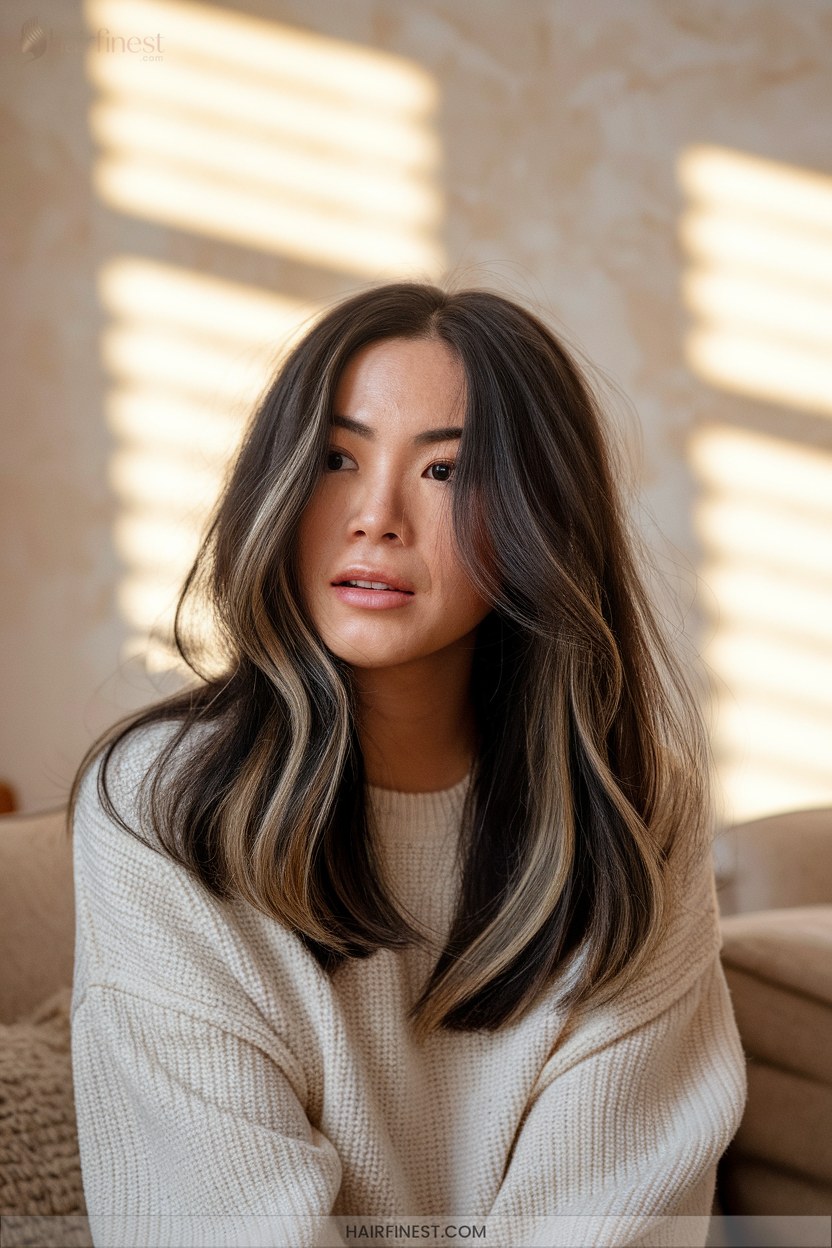

A thorough hair wash and precise drying technique set the foundation for ideal balayage color application, especially on dark hair.
Proper washing and drying are essential steps for flawless balayage, particularly when working with dark hair.
Use a clarifying shampoo to eliminate buildup, then skip washing for 24-48 hours pre-application to preserve natural oils. Dry hair completely—moisture can hinder color penetration.
Section hair into quadrants for control, ensuring each area is fully dry and prepped for best, even color absorption.
2. Effective Detangling to Prevent Uneven Results
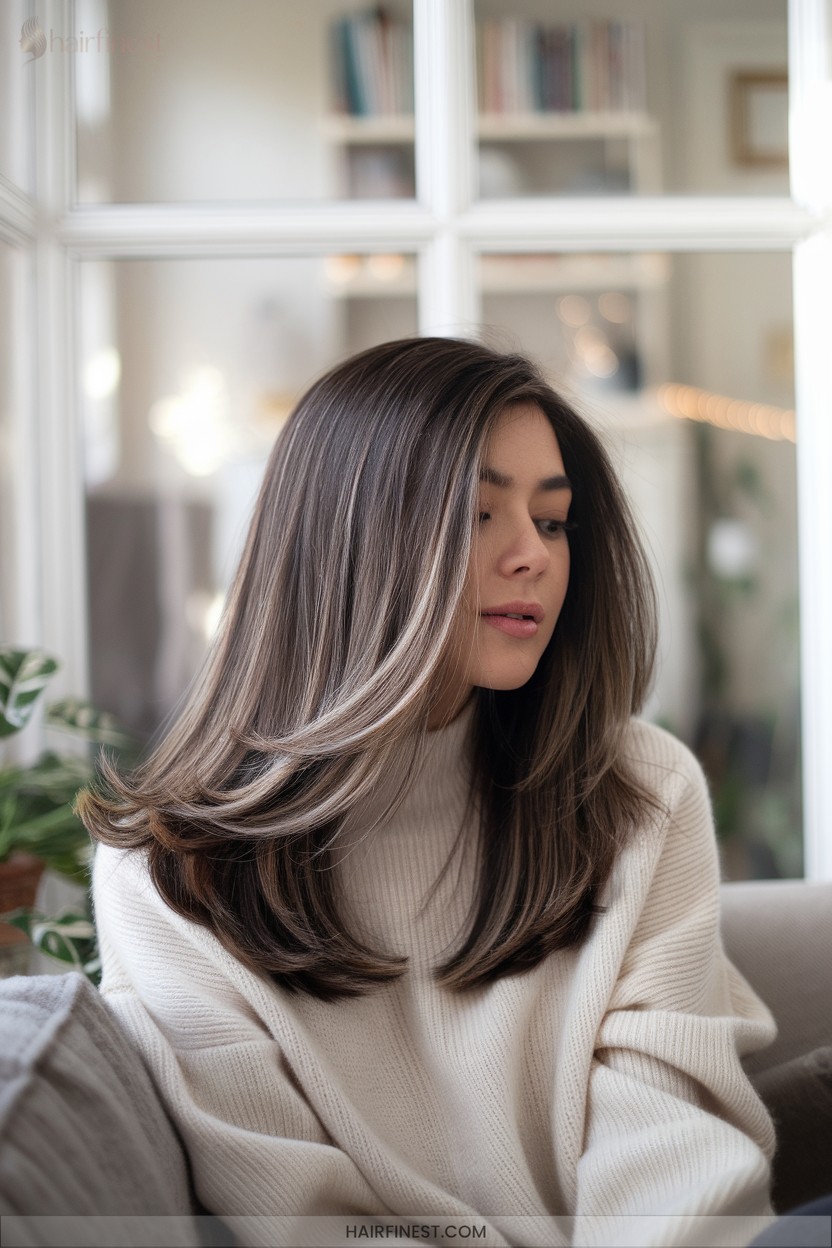
Tangles present a major obstacle to achieving seamless balayage results on dark hair.
For innovative, flawless lightening, detangle meticulously before application. Use these expert strategies:
- Apply a leave-in conditioner or detangling spray for lubrication and reduced friction
- Start detangling from ends upward with a wide-tooth comb or detangling brush
- Work on damp—not wet or dry—hair to minimize breakage and achieve uniform product penetration
3. Sectioning Hacks for Seamless Balayage
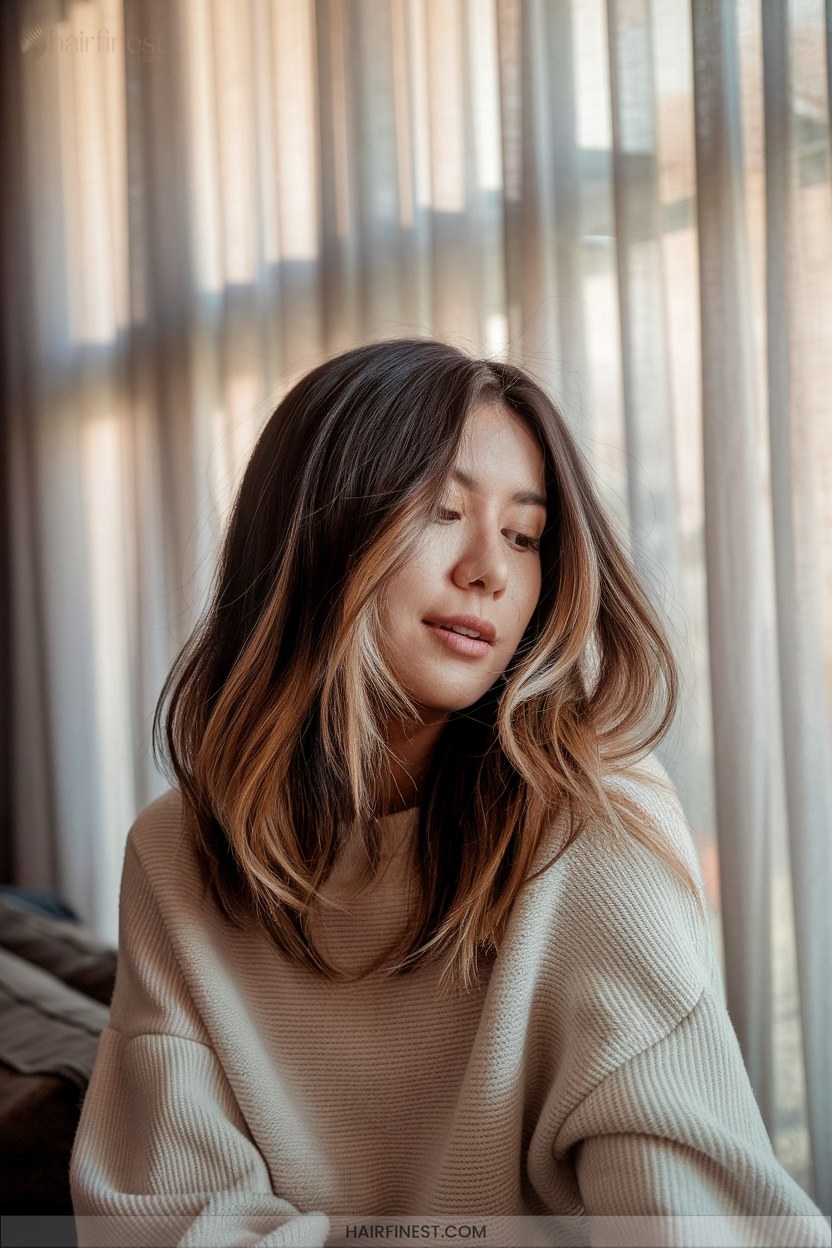
Even before you pick up your balayage brush, precise sectioning lays the foundation for flawless, dimensional color on dark hair.
Meticulous sectioning is your first step toward achieving seamless, multi-dimensional balayage on dark hair.
Divide the hair into two halves for dual techniques, then use half-inch diagonal subsections, adjusting for density and texture. Create U-shaped sections at the hairline for face-framing impact.
Isolate highlights with minimal hair between, starting in the back quadrant to guarantee balanced coverage and seamless blends.
4. Setting Up Your Workspace for Mess-Free Coloring
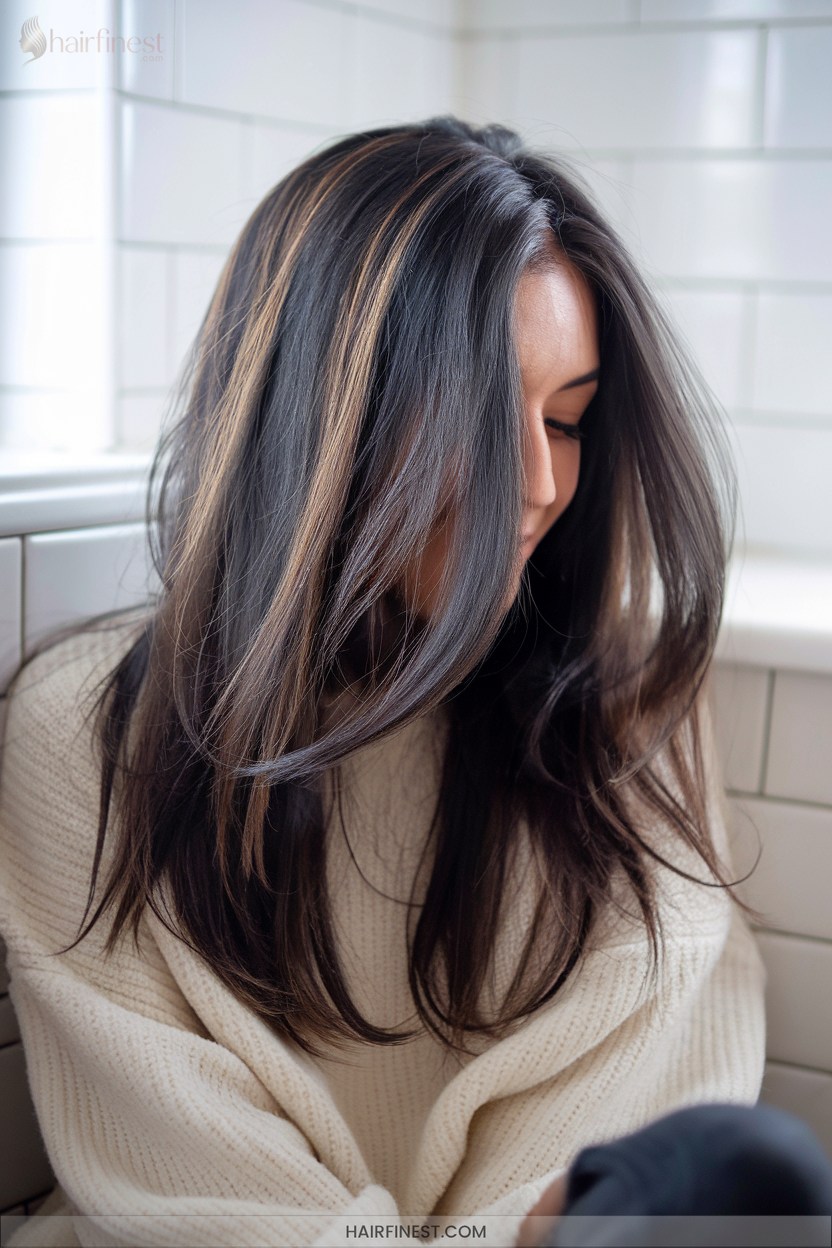
Start by mapping out your salon suite layout to maximize both efficiency and cleanliness during balayage services. Precise measurements guarantee ideal placement of foldable color trays, carts, and wall-mounted storage.
Keep your workspace future-ready by integrating:
- Foldable trays for adaptable workflow
- Wall-mounted racks to declutter countertops
- Bleach-safe towels and spill kits for rapid cleanup
Maintain ergonomic height, proper ventilation, and strict hygiene protocols throughout.
5. Choosing the Right Balayage Hair Dye Kit
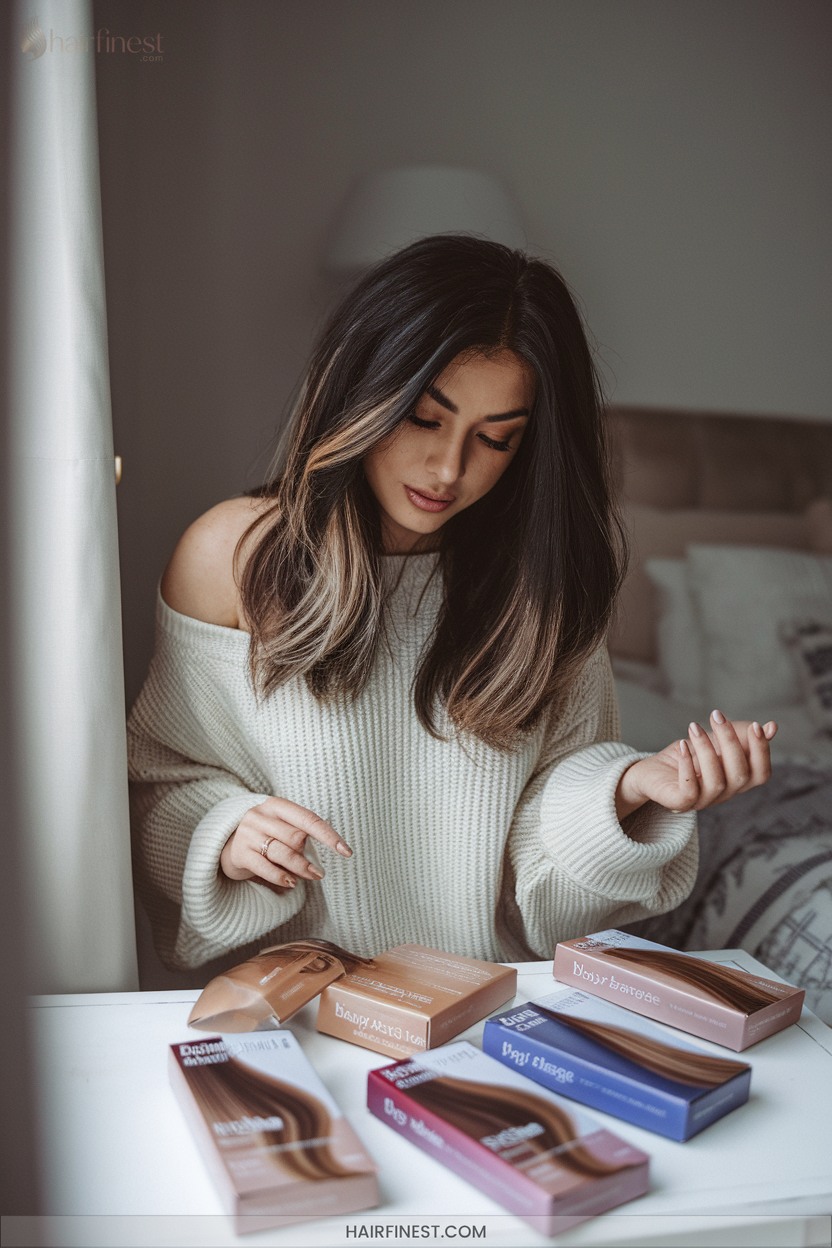
How do you select a balayage hair dye kit that delivers professional results on dark hair without bleach?
Prioritize kits with precision applicators, specialized balayage brushes, and nourishing ingredients like avocado oil. Opt for formulas featuring toning masks to neutralize brassiness. Evaluate developer strength and verify user-friendly instructions.
Choose reputable brands—such as L’Oreal or Madison Reed—for salon-quality, mess-free, at-home application. Always review safety instructions and ingredients.
6. Mastering the Sweeping Motion Technique
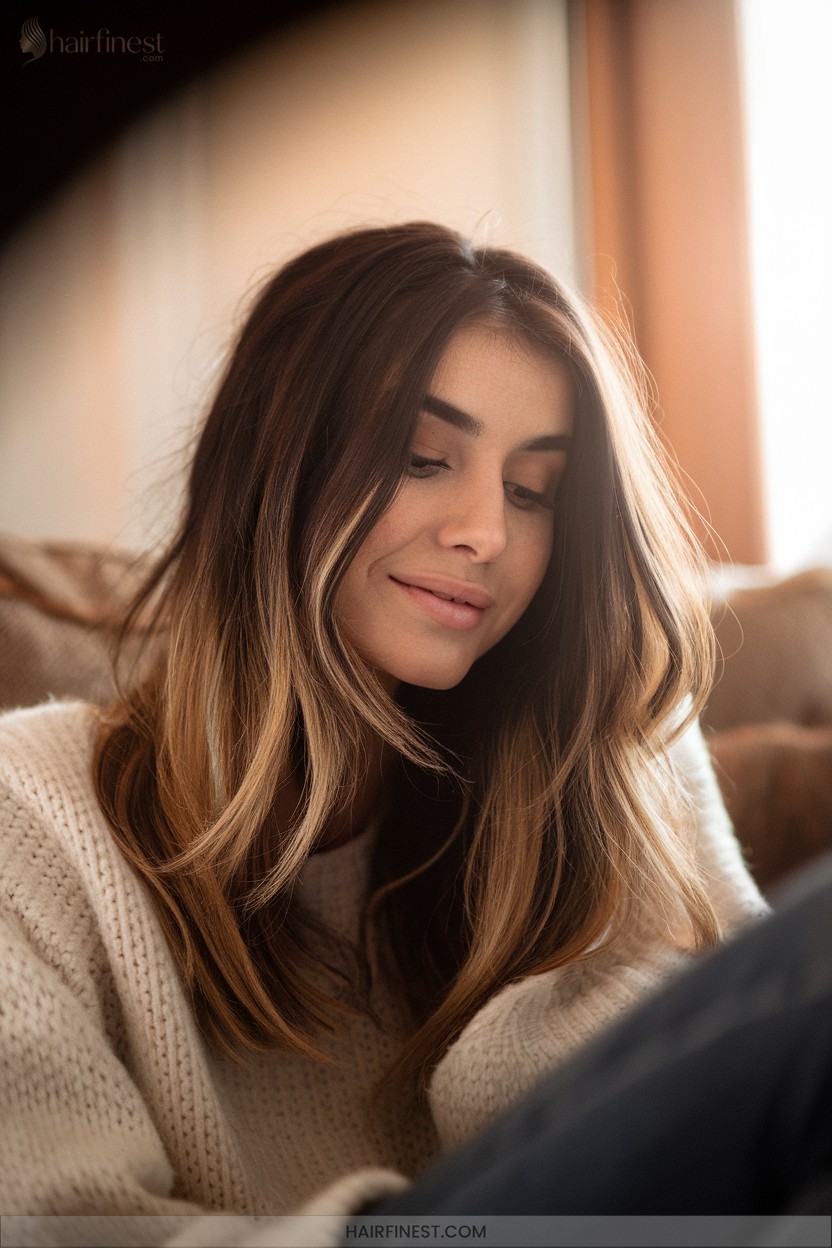
Perfecting the sweeping motion technique is essential for achieving salon-quality balayage on dark hair without bleach. Hold a flat, wide brush at an angle, maintaining steady tension, and use broad, fluid strokes from mid-lengths to ends for a seamless gradient.
For ideal results:
- Apply color in diagonal subsections for natural blending
- Feather out product edges for a soft blend
- Adjust brush angle for customized blend
7. Layering Multiple Shades for Rich Dimension
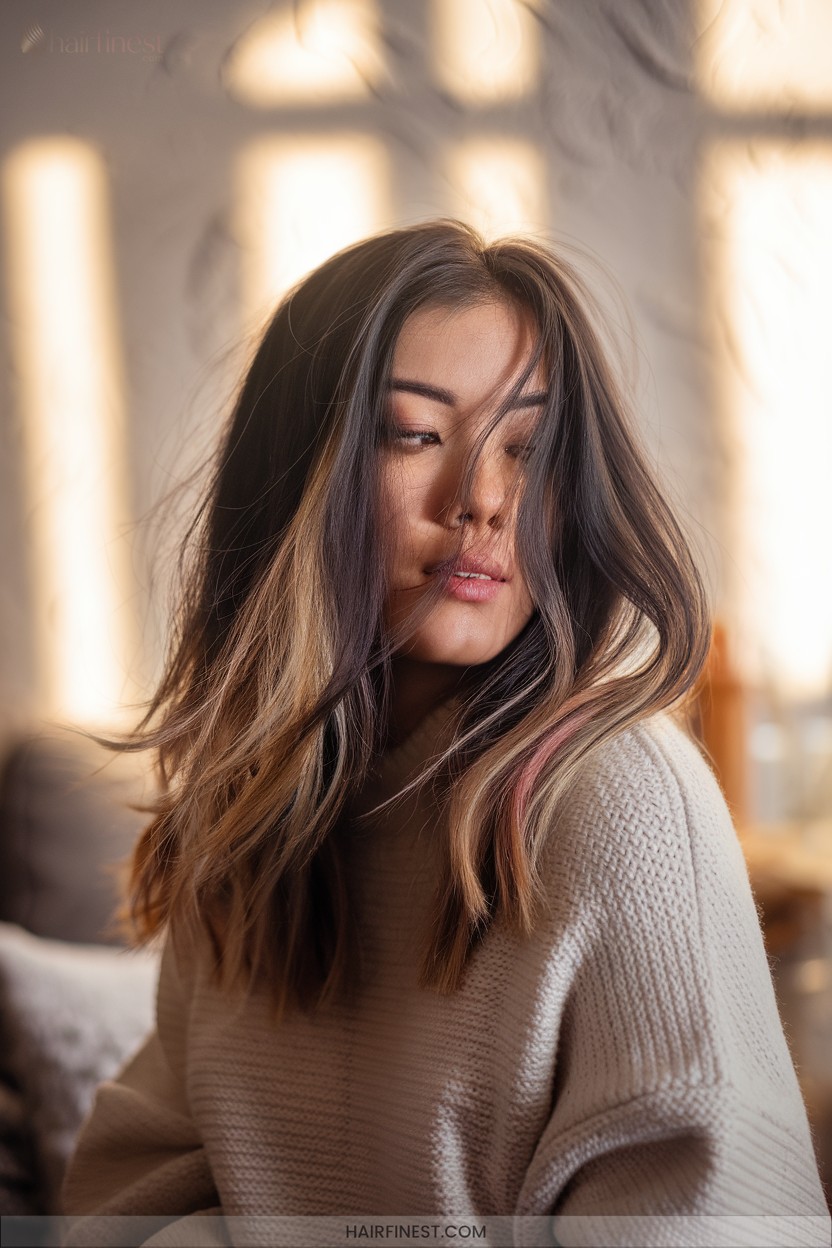
Achieving rich dimension on dark hair without bleach relies on strategic layering of multiple shades that enhance depth and movement. Select hues one to three levels lighter or darker than your base, blending ashy, caramel, or rose brown tones.
Use foiled lowlights beneath balayage-painted highlights, weaving diagonal subsections for seamless integration. Prioritize irregular highlight placement near the face and crown, and employ root shadows for 3D realism.
8. Gradual Color Build-Up Without Bleach
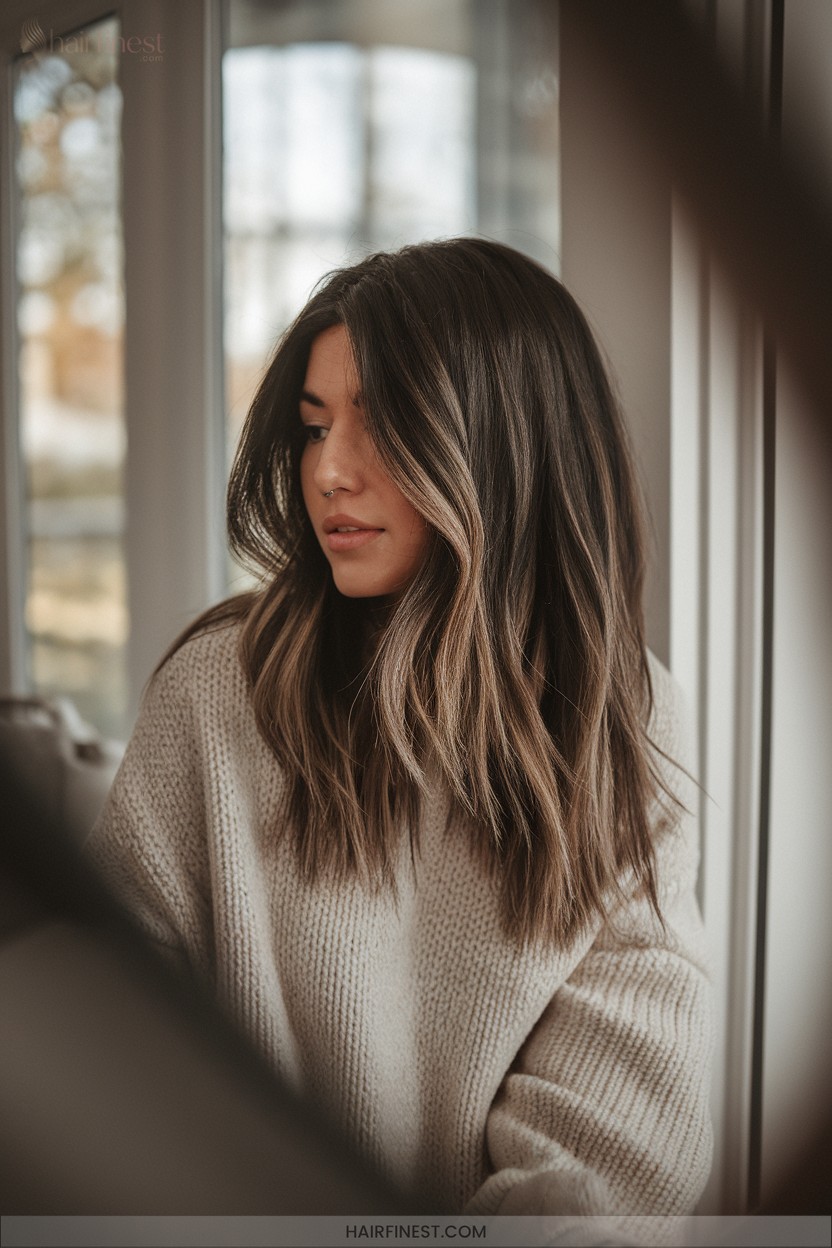
Gradual color build-up offers a controlled approach for dark hair clients who want dimension without the risks of bleach. Leverage advanced color theory, technique selection, and professional-grade products for ideal results.
To innovate your routine, consider:
- Using ammonia-free dyes with balayage for subtle, healthy blends
- Applying semi-permanent colors for a soft sombré effect
- Scheduling regular trims and touch-ups to maintain vibrancy and prevent uneven fading
9. Using Honey Tea Brown for Natural-Looking Highlights
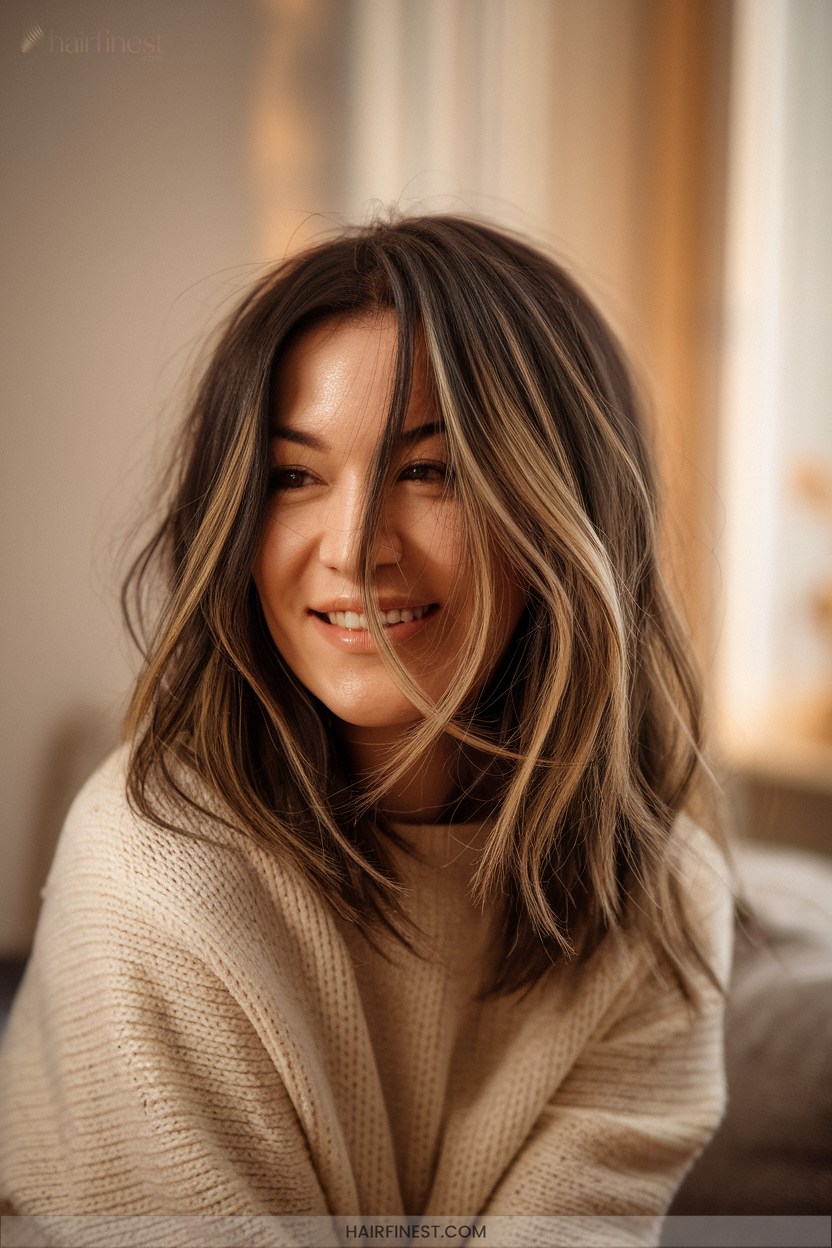
Building on the concept of gradual color build-up, honey tea brown offers an ideal shade for clients seeking natural-looking highlights on dark hair without bleach. Employ ribbon balayage or freehand painting for precise, customized placement, adapting to each hair texture.
Layer caramel, copper, or neutral blonde tones to enhance depth and dimension. Regular touch-ups and color-protective products are essential for maintaining vibrancy and seamless blend.
10. Applying Color Depositing Products for Subtle Changes

Color depositing products offer a controlled method for introducing subtle tonal shifts to dark hair without bleach. Achieve nuanced color enhancement by conducting a strand test, selecting shades that complement your base, and applying on wet or dry hair for varying intensity.
For best results:
- Distribute evenly with a wide-tooth comb
- Process for 1–15 minutes
- Rinse thoroughly to achieve uniform deposit
11. Ammonia-Free Dyes for Healthier Hair
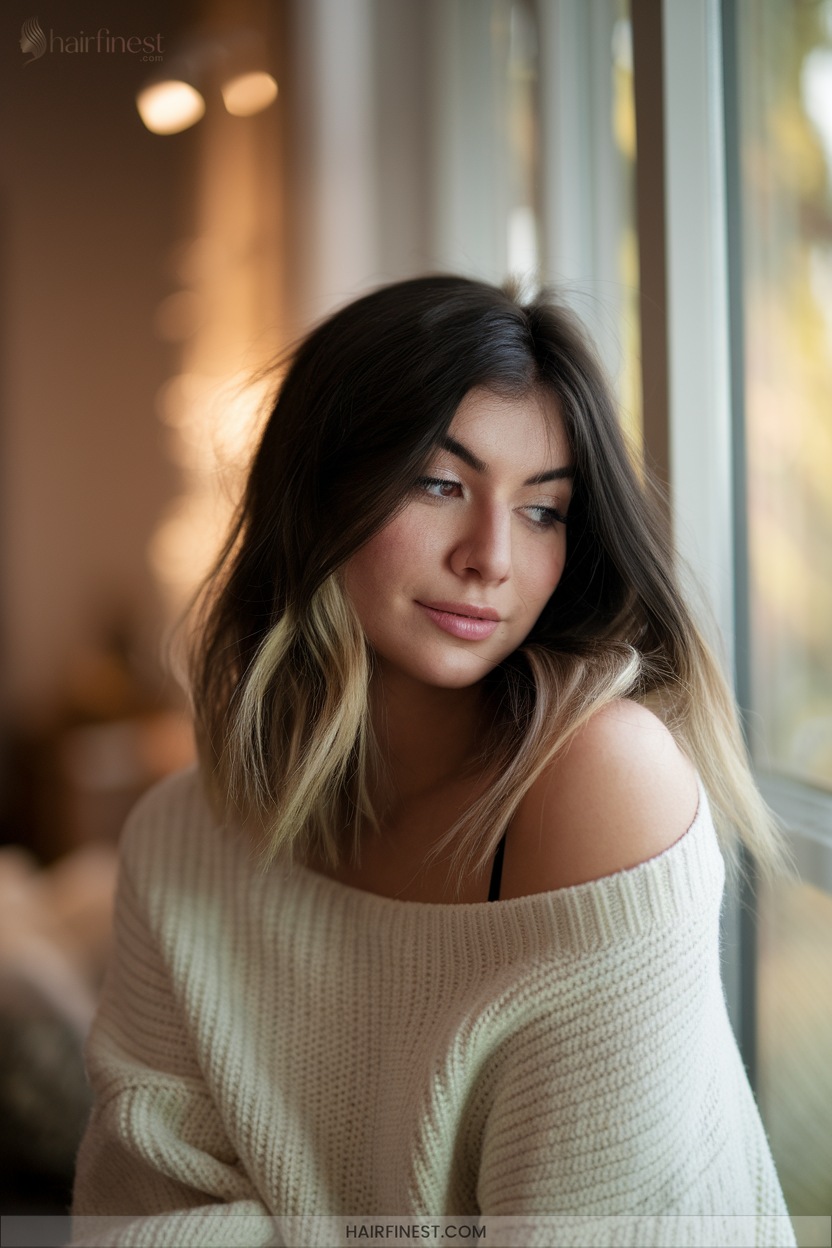
After exploring how color depositing products subtly enhance dark hair, consider ammonia-free dyes for more lasting and vivid results without compromising hair integrity. Select formulations using ethanolamine or monoethanolamine—these alternatives minimize cuticle disruption, preserving protein structure and moisture.
Apply to clean, dry hair, ensuring even saturation for best gray coverage. Always perform a patch test to reduce allergy risk and prioritize brands with advanced, nourishing ingredients.
12. Plant-Based Pigments for Gentle Color Enhancement
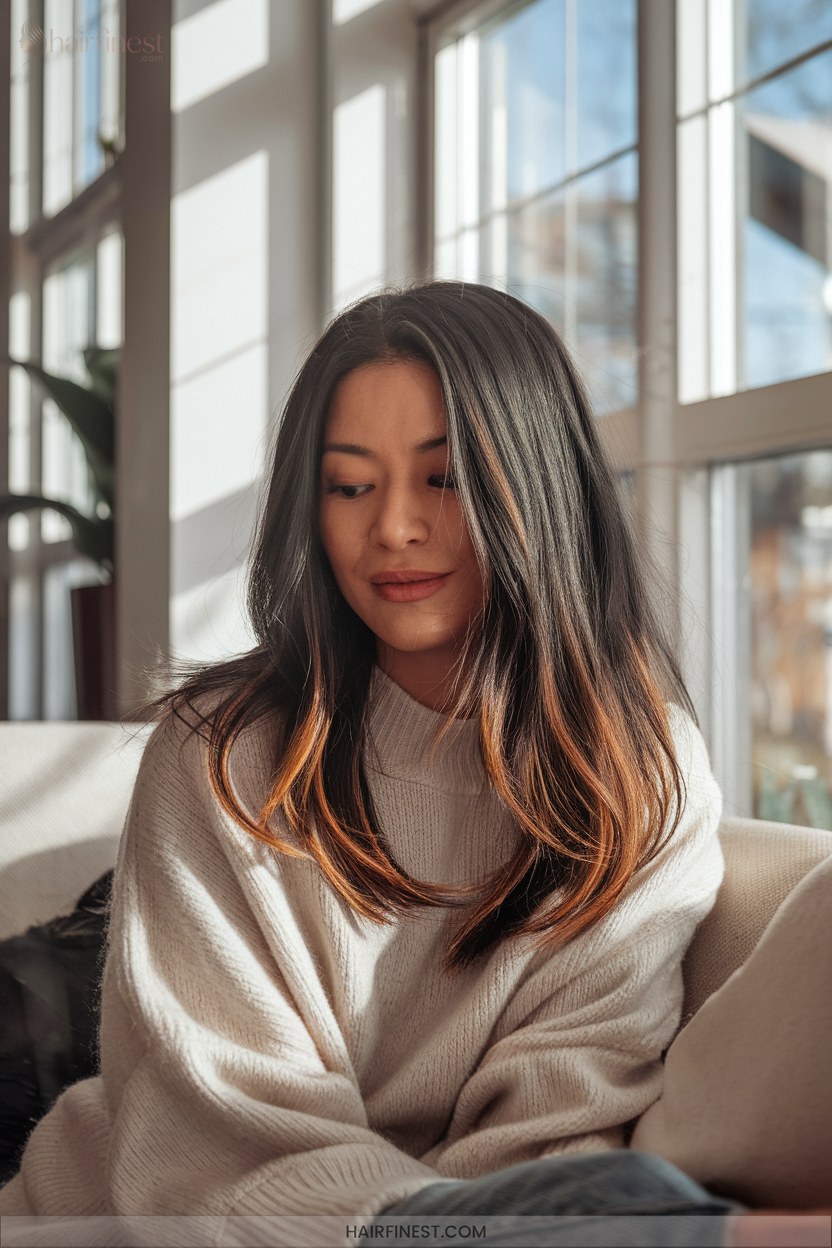
Plant-derived pigments offer a gentle alternative for enhancing dark hair color without chemical risks or cuticle disruption. For innovative no-bleach balayage, you’ll apply botanicals like henna, indigo, or chamomile in targeted sections.
These pigments:
- Preserve hair structure and moisture by coating, not penetrating, strands
- Condition and strengthen fibers, improving manageability
- Fade naturally, enabling seamless, low-maintenance tonal shifts
13. Spotlight Technique With Foils for Targeted Brightness
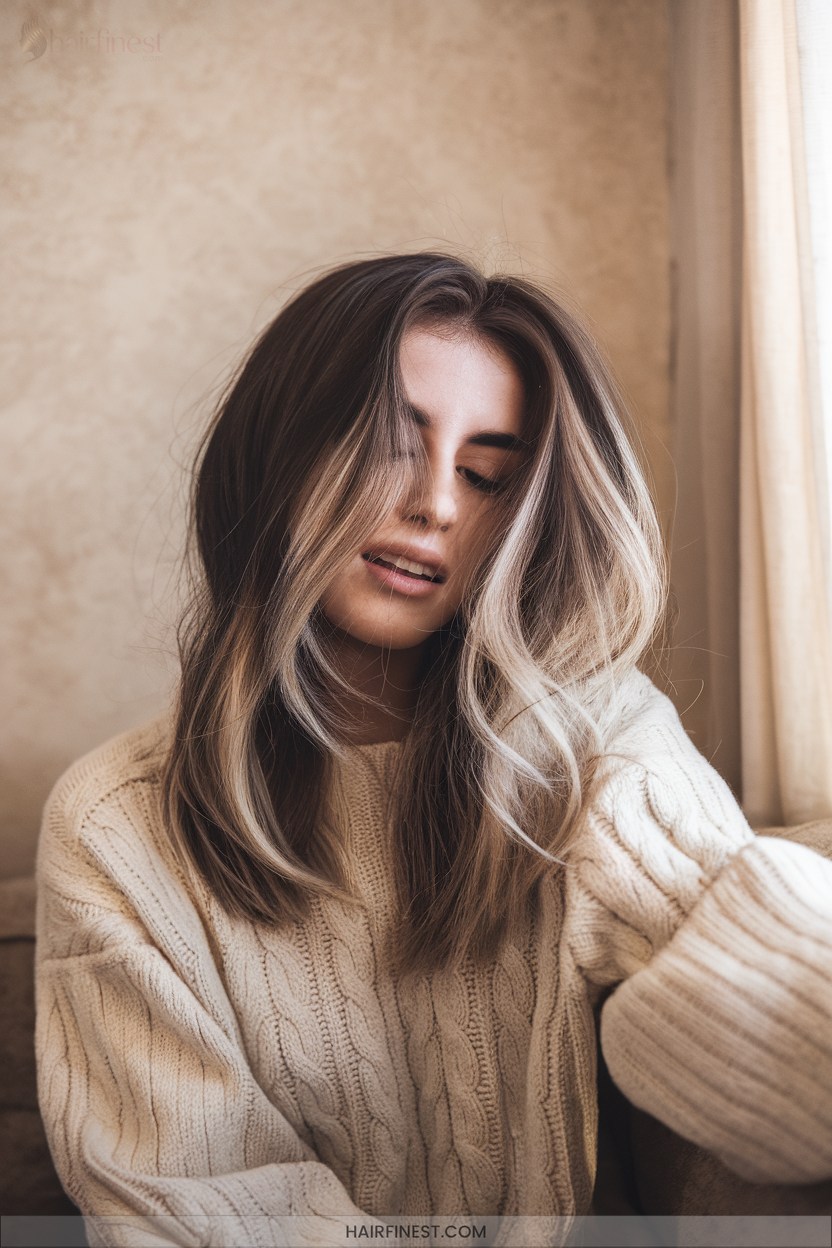
A strategic approach to balayage on dark hair involves the spotlight technique with foils, allowing for precise placement of brightness exactly where you want it.
Achieve luminous, customized balayage on dark hair with the spotlight technique and foils for precise, radiant brightness exactly where you want it.
Section the hair meticulously and weave out darker strands for dimension. Apply chosen lightener with a power painter, ensuring full saturation and ideal tension using a balayage board.
Monitor processing closely, then tone with a targeted formula to achieve controlled, innovative luminosity.
14. Shadow Rooting for a Blended Finish
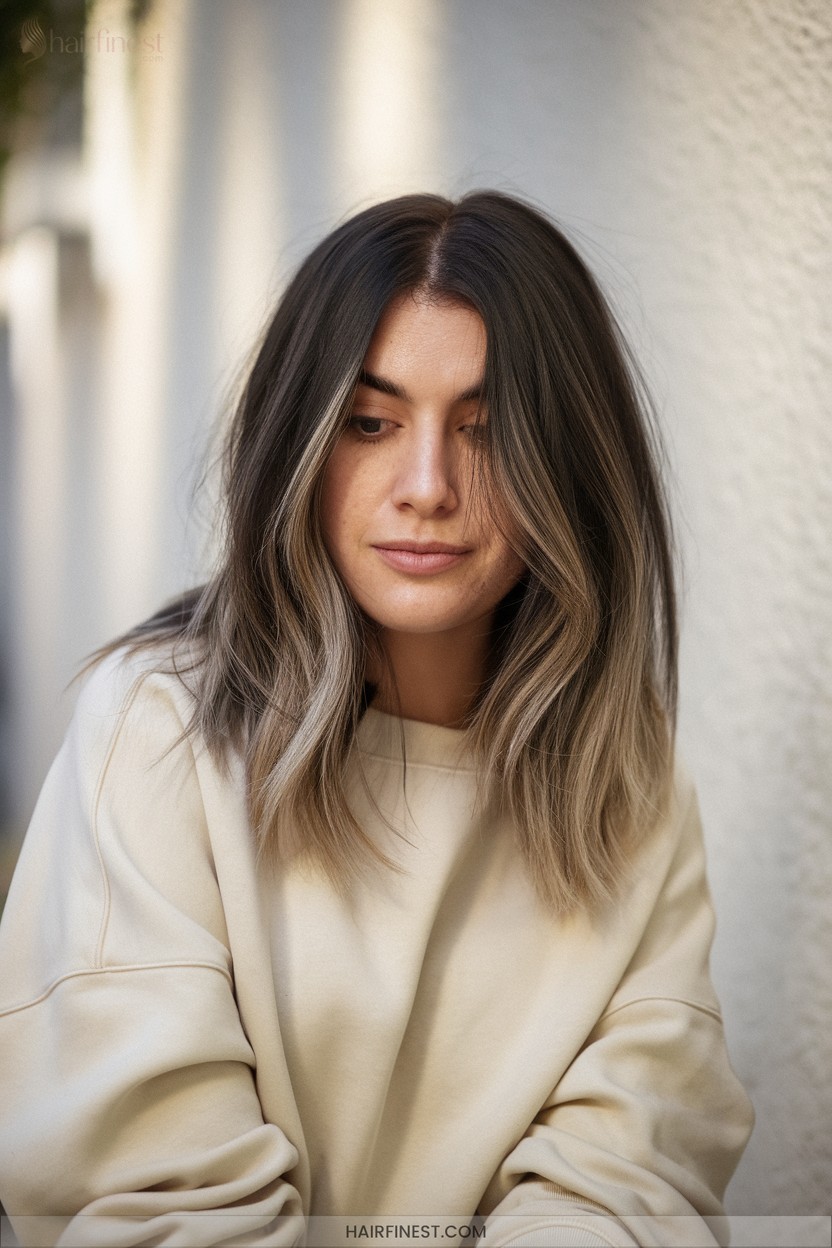
Shadow rooting creates a seamless gradient between your natural dark base and balayage highlights by applying a deeper shade at the roots and softly blending it downward.
To master this advanced blending technique:
- Feather the root color with a soft brush for a melted blend.
- Incorporate fine, lighter pieces through the shadow for dimension.
- Use foilyage to insulate and control brightness beneath the root shadow.
15. Essential Aftercare for Long-Lasting Color
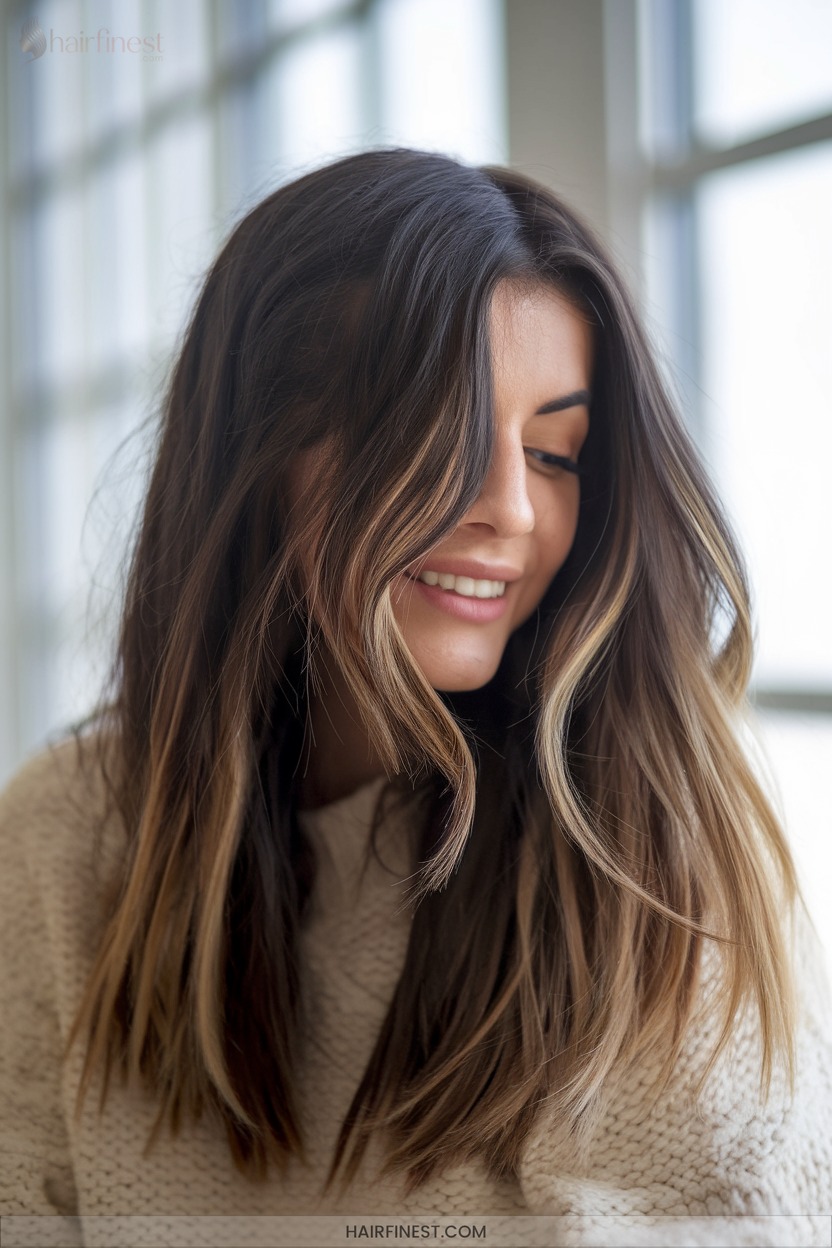
Perfecting a seamless blend with techniques like shadow rooting sets the stage, but maintaining your balayage’s vibrancy and health requires a targeted aftercare regimen. Wash hair just 2–3 times weekly with sulfate-free, color-protecting shampoo in lukewarm water.
Condition after every wash, incorporate weekly deep treatments, and apply nourishing oils. Shield hair from UV exposure, avoid chlorine, and use microfiber towels to minimize color loss and breakage.
16. Scheduling Touch-Ups to Keep Balayage Vibrant
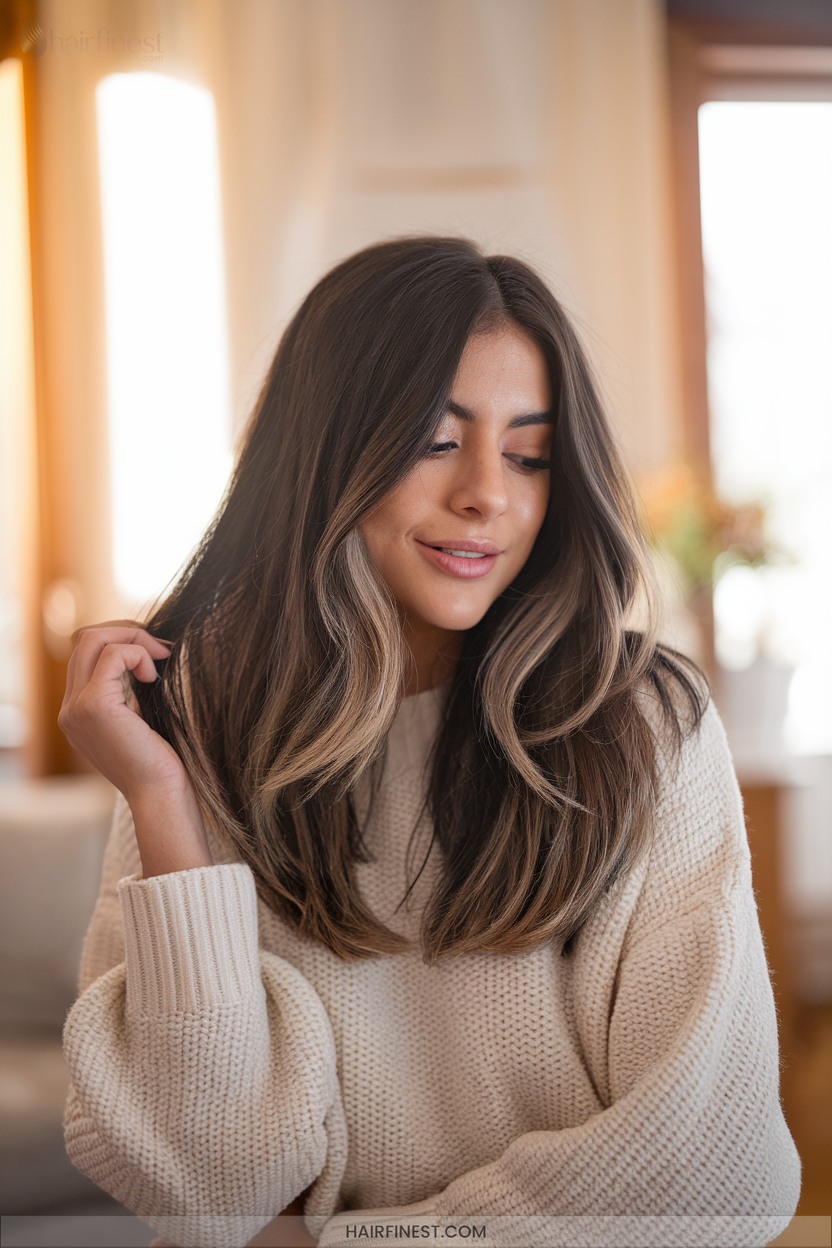
When should you return to the salon to keep your balayage looking luminous and seamless?
Schedule touch-ups every 3–6 months, with most experts recommending the 4-month mark for ideal vibrancy.
Most experts suggest a balayage refresh every 4 months to maintain luminous, seamless color and optimal vibrancy.
Assess your regrowth and shift your timing based on visual cues:
- Increased contrast at the roots
- Loss of dimensional, sun-kissed effect
- Brassy or uneven tones emerging
Adapt intervals based on growth rate and desired polish.
Frequently Asked Questions
Can Balayage Be Done on Chemically Relaxed or Permed Hair?
You can safely balayage chemically relaxed or permed hair by employing demi-permanent or semi-permanent dyes, performing strand tests, prioritizing deep conditioning, and customizing freehand placement. Always consult a colorist to assess structural integrity and minimize oxidative damage.
How Long Does No-Bleach Balayage Typically Last on Dark Hair?
You’ll see no-bleach balayage on dark hair last about 6–8 weeks before fading begins. Prioritize color-safe shampoos, minimize heat styling, and schedule gloss treatments; these steps extend vibrancy, reduce cuticle damage, and optimize pigment retention between touch-ups.
Will Balayage Work on Very Short or Pixie-Length Hair?
You can achieve balayage on pixie-length hair by using micro-sectioning, feathered brush strokes, and strategic placement around the crown and face frame. Prioritize seamless blending and combine babylights for dimension. Adapt foilayage for enhanced light diffusion.
Can I Swim or Go to the Beach After Getting Balayage?
You shouldn’t swim or hit the beach within 72 hours post-balayage, as pigment requires stabilization. For best color retention, pre-saturate hair, apply UV-protective products, and use a silicone swim cap to minimize chemical, salt, and UV exposure.
Are There Risks of Allergic Reactions With No-Bleach Dyes?
Yes, you can still experience allergic reactions with no-bleach dyes, since they often contain sensitizers like para-phenylenediamine (PPD). Always perform a 48-hour patch test, monitor for contact dermatitis, and consult a dermatologist for tailored innovation-focused recommendations.
Conclusion
Mastering no bleach balayage on dark hair requires precision and the right techniques. By prepping your hair with a clarifying wash, meticulous detangling, and strategic sectioning, you’ll achieve even color application.
Use dedicated balayage kits, employ foil for targeted lightening, and blend with shadow rooting for seamless blends. Don’t skip aftercare—hydrating masks and sulfate-free shampoos preserve vibrancy.
Schedule regular touch-ups to maintain depth and luminosity. Follow these expert steps, and you’ll achieve salon-quality results at home.


